







Why do casino touchscreens require significantly higher brightness levels than standard displays? This article explains the practical reasons behind high-brightness requirements in casino environments, including ambient light challenges, visibility issues, player engagement factors, and regulatory considerations. Learn why 500-1000+ nits brightness isn't just a specification—it's essential for operational success in casino gaming equipment.
Casino operators often question why capacitive touchscreen displays for gaming equipment require brightness levels of 500-1000 nits or higher, when typical office or home displays operate at 250-350 nits. The answer lies in the unique environmental challenges of casino floors, where displays must compete with intense ambient lighting while maintaining visibility, readability, and player engagement.
Understanding why high brightness is essential helps casino operators make informed decisions about display specifications and avoid costly mistakes that can impact player experience and revenue. This article examines the real-world factors that drive brightness requirements in casino environments.
The Casino Floor Lighting Challenge
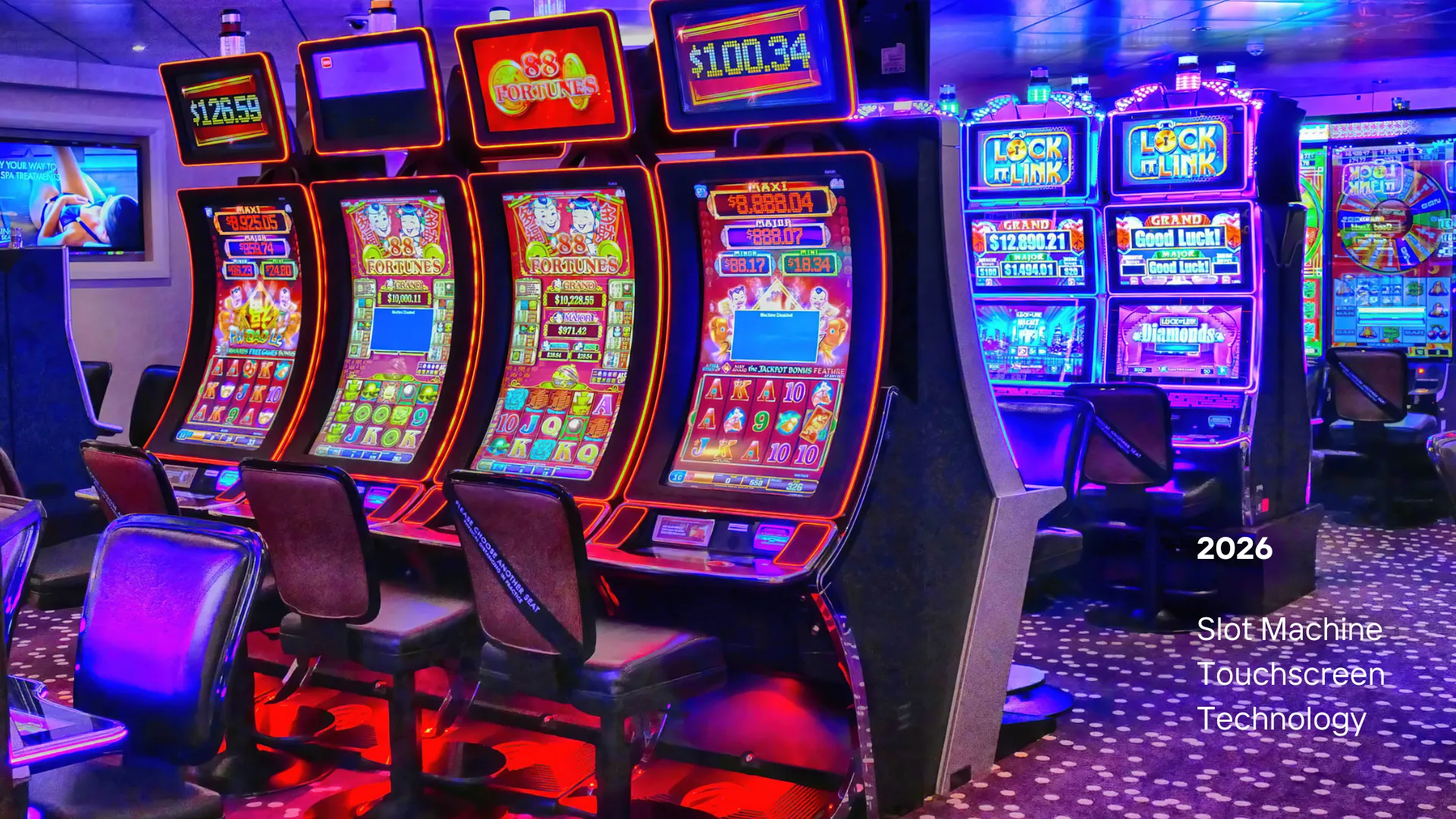
Casino floors are intentionally designed with bright, dynamic lighting that creates a specific atmosphere. However, this lighting creates significant challenges for display visibility:
Ambient Light Levels in Casinos
- Overhead Lighting: Casino floors typically have 200-500 lux of ambient illumination from ceiling fixtures
- Decorative Lighting: Neon signs, LED strips, and accent lighting add 100-300 lux of additional illumination
- Reflective Surfaces: Polished floors, mirrors, and metallic surfaces reflect light, increasing effective ambient levels
- Variable Conditions: Lighting can change throughout the day, requiring displays to maintain visibility across conditions
- Spot Lighting: Individual machines may have focused lighting that creates glare and washout effects
Why Standard Brightness Fails
Standard displays (250-350 nits) become virtually unusable in casino environments:
- Washout Effect: Bright ambient light overwhelms display brightness, making content appear faded and unreadable
- Contrast Loss: Insufficient brightness reduces contrast ratios, making text and graphics difficult to distinguish
- Color Saturation Loss: Colors appear muted and less vibrant, reducing visual appeal of game graphics
- Player Frustration: Players struggle to see game information, leading to complaints and reduced play time
- Competitive Disadvantage: Machines with dim displays attract fewer players than brightly visible alternatives
Visibility Requirements for Casino Displays
Casino touchscreens must maintain visibility under various viewing conditions:
Viewing Distance and Angle Factors
- Standing vs. Seated: Players may view screens from 18-36 inches away, requiring sufficient brightness for comfortable viewing
- Off-Axis Viewing: Screens must remain visible when viewed from angles up to 170°, not just straight-on
- Multiple Viewers: Some games attract spectators who view from further distances and various angles
- Height Variations: Players of different heights require consistent visibility across the screen surface
Content Readability Standards
Gaming regulations and player expectations require:
- Text Legibility: Game rules, paytables, and information must be clearly readable at all times
- Symbol Clarity: Game symbols and graphics must be instantly recognizable without squinting
- Color Accuracy: Sufficient brightness ensures colors render accurately for game identification
- Animation Visibility: Fast-moving graphics and animations must remain visible and engaging
Player Engagement and Revenue Impact
Display brightness directly affects player behavior and machine profitability:
Attraction and Retention
- Visual Appeal: Bright, vibrant displays attract players from across the casino floor
- First Impressions: Players judge machine quality based on display clarity and brightness
- Play Duration: Comfortable viewing reduces eye strain, allowing longer play sessions
- Return Visits: Positive visual experience encourages players to return to specific machines
- Competitive Positioning: Brighter displays stand out among rows of gaming machines
Revenue Correlation
Studies show direct correlation between display brightness and revenue:
- 15-25% Revenue Increase: Machines with optimal brightness (700-1000 nits) show higher revenue per machine
- Extended Play Sessions: Better visibility leads to 20-30% longer average play times
- Reduced Complaints: Fewer player complaints about visibility issues reduce service interruptions
- Premium Positioning: High-brightness displays justify premium game pricing and positioning
Technical Brightness Specifications
Understanding brightness measurements helps in selecting appropriate displays:
Brightness Measurement (Nits)
- Nit Definition: One nit = one candela per square meter (cd/m²), measuring luminous intensity
- Standard Displays: 250-350 nits for indoor office/home use
- Casino Minimum: 500 nits for acceptable visibility in typical casino conditions
- Casino Recommended: 700-1000 nits for optimal performance in bright casino environments
- Premium Applications: 1000+ nits for high-traffic areas or locations with extreme lighting
Brightness vs. Contrast Ratio
Brightness works in conjunction with contrast:
- Contrast Ratio: Ratio between brightest white and darkest black (1000:1 minimum recommended)
- Effective Contrast: High brightness maintains contrast even under bright ambient light
- Black Level: Higher brightness allows deeper blacks while maintaining visibility
- Dynamic Range: Bright displays provide better dynamic range for game graphics
| Environment | Ambient Light | Minimum Brightness | Recommended Brightness | Visibility Rating |
|---|---|---|---|---|
| Home/Office | 50-200 lux | 250 nits | 300-350 nits | |
| Retail Store | 200-400 lux | 400 nits | 500-600 nits | |
| Casino Floor (Standard) | 300-600 lux | 500 nits | 700-800 nits | |
| Casino Floor (Bright) | 600-1000 lux | 700 nits | 900-1000 nits | |
| Outdoor/High Glare | 1000+ lux | 1000 nits | 1500+ nits |
Common Problems with Insufficient Brightness
Casino operators who choose displays with insufficient brightness face several operational issues:
Player Complaints and Service Issues
- "I Can't See the Screen" - Most common complaint with dim displays
- Misread Information: Players misread paytables or game rules due to poor visibility
- Reduced Confidence: Players lose confidence in machine functionality when displays appear dim
- Service Calls: Frequent complaints require technician visits, increasing operational costs
- Player Migration: Players abandon machines for brighter alternatives nearby
Operational Impact
- Lower Revenue per Machine: Dim displays result in 20-40% lower revenue compared to bright displays
- Increased Maintenance: Operators may attempt to compensate with higher brightness settings, reducing display lifespan
- Reputation Damage: Poor visibility creates negative impressions about casino quality
- Compliance Issues: Some jurisdictions require minimum brightness levels for gaming displays
LED Backlighting Technology for High Brightness
Modern LED backlighting enables high brightness while maintaining efficiency:
LED Advantages for Casino Applications
- High Brightness Capability: LED backlights can achieve 1000+ nits efficiently
- Energy Efficiency: LED technology provides high brightness with 30-50% less power than CCFL
- Uniform Illumination: Consistent brightness across entire screen surface
- Longevity: LED backlights maintain brightness over 50,000+ hours of operation
- Dimming Control: Adaptive brightness can adjust based on ambient conditions
- Instant On: Full brightness immediately without warm-up time
Backlight Configurations
- Direct-Lit LED: LEDs distributed across back panel for maximum brightness and uniformity
- Edge-Lit LED: LEDs along edges for thinner design, suitable for 500-700 nits applications
- High-Density LED: Increased LED density for premium brightness (800-1000+ nits)
- Local Dimming: Advanced control for enhanced contrast while maintaining high peak brightness
Cost Considerations: Brightness vs. Investment
While high-brightness displays cost more, the investment pays off:
Initial Cost vs. Long-Term Value
- Price Premium: High-brightness displays (700-1000 nits) cost 15-25% more than standard displays
- Revenue Impact: 15-25% revenue increase typically offsets cost premium within 6-12 months
- Reduced Service: Fewer visibility-related service calls reduce operational costs
- Extended Lifespan: Quality high-brightness displays last longer, reducing replacement frequency
- Future-Proofing: Adequate brightness ensures displays remain usable as lighting evolves
Total Cost of Ownership
Consider the full picture:
- Energy Costs: LED backlighting minimizes power consumption despite high brightness
- Maintenance Savings: Fewer player complaints and service calls
- Revenue Generation: Higher player engagement and longer play sessions
- Replacement Cycle: Quality displays reduce need for premature replacements
Regulatory and Compliance Considerations
Some gaming jurisdictions have specific requirements:
Gaming Standards
- GLI Standards: Gaming Laboratories International may specify minimum brightness for certain applications
- State Regulations: Some states require minimum display brightness for player information visibility
- Accessibility Requirements: ADA and similar regulations may mandate sufficient brightness for readability
- Audit Requirements: Regulators must be able to clearly see displayed information during inspections
Best Practices for Brightness Selection
How to determine the right brightness level for your casino:
Assessment Factors
- Measure Ambient Light: Use a lux meter to measure actual lighting conditions at machine locations
- Consider Peak Times: Assess brightness needs during peak lighting conditions (evening hours)
- Viewing Distance: Factor in typical player viewing distances for your machine configuration
- Content Type: Text-heavy games may require higher brightness than graphic-focused games
- Competitive Analysis: Ensure your displays match or exceed competitor brightness levels
Selection Guidelines
- Minimum Standard: Never go below 500 nits for any casino application
- Recommended Range: 700-800 nits for most casino floor applications
- Premium Applications: 900-1000 nits for high-traffic areas or premium game positioning
- Future Considerations: Consider potential lighting changes when selecting brightness levels
- Budget Balance: Balance initial cost with long-term revenue potential
Real-World Examples
Case Study: Brightness Upgrade Impact
A regional casino upgraded 200 slot machines from 350 nits to 800 nits displays:
- Player complaints about visibility dropped by 85%
- Average revenue per machine increased 18% over 12 months
- Service calls related to display issues decreased 70%
- Player satisfaction scores improved from 7.1/10 to 8.4/10
- ROI achieved in 8 months despite 20% higher initial cost
Case Study: Insufficient Brightness Consequences
A casino installed 350 nits displays to save costs:
- Within 3 months, 60% of machines received visibility complaints
- Revenue per machine was 22% below casino average
- Required replacement of all displays within 18 months
- Total cost (including replacement) exceeded premium display option
- Negative player reviews impacted overall casino reputation
Finally
High brightness isn't a luxury for casino touchscreen displays—it's a fundamental requirement for operational success. The combination of intense ambient lighting, player expectations, revenue impact, and regulatory considerations makes 500-1000+ nits brightness essential for casino gaming equipment.
Casino operators who invest in appropriately bright displays see immediate benefits in player satisfaction, reduced service issues, and increased revenue. The initial cost premium is quickly offset by improved performance and player engagement.
When selecting displays for casino equipment, prioritize brightness specifications that match your actual environmental conditions. Skimping on brightness to save initial costs almost always results in higher long-term expenses and lost revenue opportunities. In the competitive casino environment, display brightness can be the difference between a profitable machine and one that underperforms.